LEGO, from crisis to comeback: what it teaches companies that want to do AI
The LEGO story teaches that innovation without direction leads to crisis. In the age of AI, innovating deeply on your core is worth more than chasing every new technological trend.

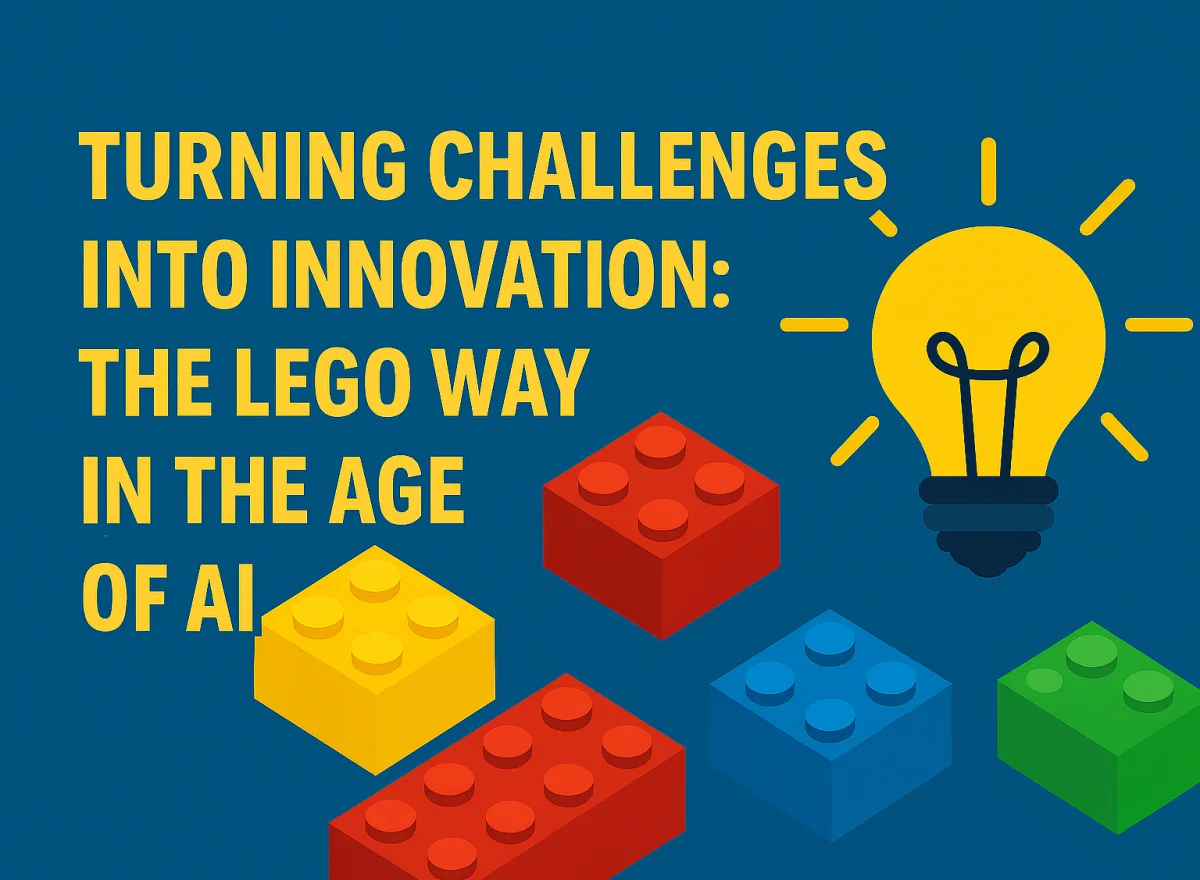
In the world of digital transformation and artificial intelligence, it's easy to fall in love with the tools: new platforms, generative models, "intelligent" assistants that promise to change everything. Yet the most interesting business stories remind us that true transformation is never just technology: it's the ability to choose, to say no, to innovate without losing yourself.
It's one of the reasons why, when I work with companies at Castaldo Solutions, I often return to the LEGO case. Not just as an icon of childhood, but as a concrete example of how innovation can nearly lead to failure and then, with a shift in perspective, become the lever for comeback.
The crisis of "rigid" innovation
In the early 2000s, LEGO was in deep crisis. To react to competition and market changes, the company chose a seemingly logical path: innovate in all directions. New product lines at rapid pace, forays into sectors far from its core – theme parks, clothing, gadgets, video games – and also increasingly pre-assembled toys, far from the free-building experience that had made the brand famous.
Result: internal complexity through the roof, rising costs, confused people, and a brand identity that was fading. LEGO was innovating, yes, but in a "rigid" way: projects imposed from above, little listening to customers, a rush to do new things without asking if they were truly coherent with what made the brick unique.
The turning point: back to the heart
The turning point comes with new CEO Jørgen Vig Knudstorp and a question as simple as it is radical: what do people really love, deep down, when they play with LEGO? From there, a process of cleanup, reduction, and listening begins. You return to the heart of the building game, but not in a nostalgic way: you experiment, observe, correct. Above all, you involve those who use and love LEGO.
The community – children, families, passionate adults – stops being a passive audience and becomes part of the process. Channels emerge to gather ideas, initiatives like LEGO Ideas that let fans propose sets, vote on them, see some creations become official products. Innovation is no longer a leap in the dark, but a path of small experiments guided by a clear north star: stay true to LEGO's DNA while expanding it without twisting it.
The lesson for the age of AI
What does all this have to do with AI and digital transformation? Much more than it seems. Today many companies behave like LEGO during its worst period: they open dozens of digital initiatives and AI projects, buy tools, activate pilots, but struggle to connect all of this to a clear direction, to solid processes, to real customer needs. The risk is the same: complexity, waste, disillusionment.
The LEGO lesson, instead, invites a different approach. It's not about innovating less, but about innovating with intention. It means asking yourself:
- What is our "brick", our core value?
- In what ways can AI strengthen it, make it more accessible, more effective, more personalized?
- What small experiments can we run, measuring impact, before extending a technology across the organization?
Artificial intelligence, in this framework, becomes a tool to better design services and processes, not an end to pursue because "it's happening". It's the difference between jumping on every novelty and building, step by step, a transformation path coherent with your own identity.
Conclusions
LEGO reminds us that a crisis doesn't arise only from a lack of ideas, but also from an excess of unfiltered ideas, misaligned. And that comeback doesn't come from a stroke of technological genius, but from discipline: experiment, listen, learn, without ever losing sight of who you are and who you work for.
In the age of AI, it may seem counterintuitive to say it, but it's often the most prudent and profitable choice: innovate less "in breadth" and much more "in depth", as LEGO did with its bricks.
Gaetano Castaldo CEO & Founder, Castaldo Solutions