The AI race ignites the new energy revolution
Between data centers consuming tens of gigawatts and MIT's new ultra-thin solar cells, AI is forcing the system into an energy upgrade like never before. The challenges don't stop us: they force us to evolve.

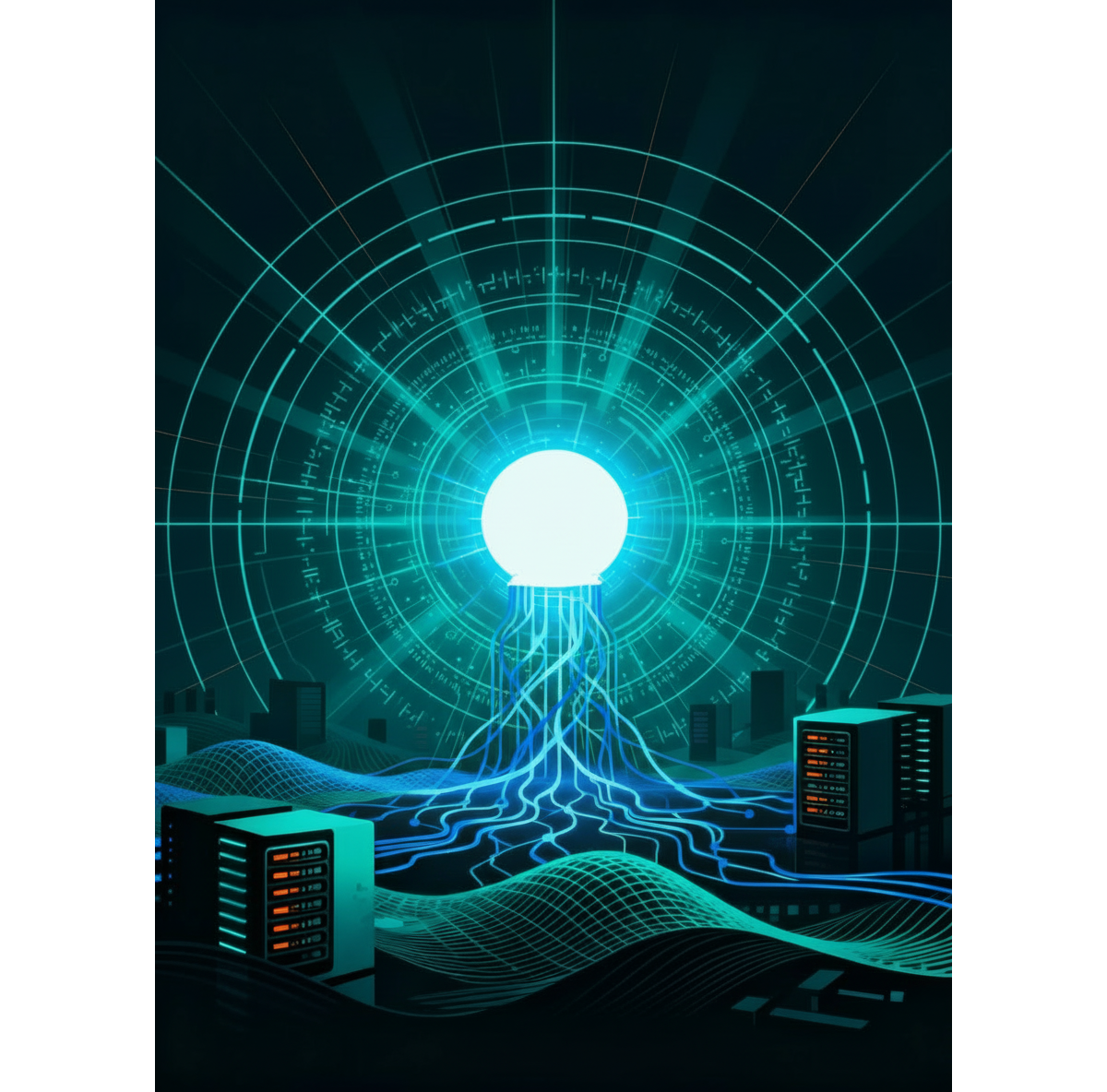
When talking with technicians who install on-premise AI servers, you hear the same underlying feeling: amazement at the power, but also discomfort about the amount of energy required. To approach, even remotely, the performance of the big players, you need significant infrastructure and electrical loads that start to raise eyebrows.
That's when you ask yourself: are we building something unsustainable?
The energy black hole of AI
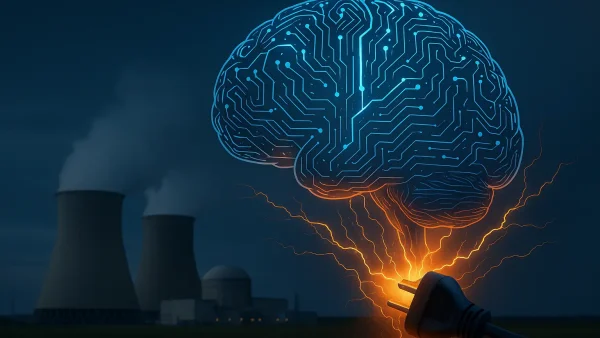
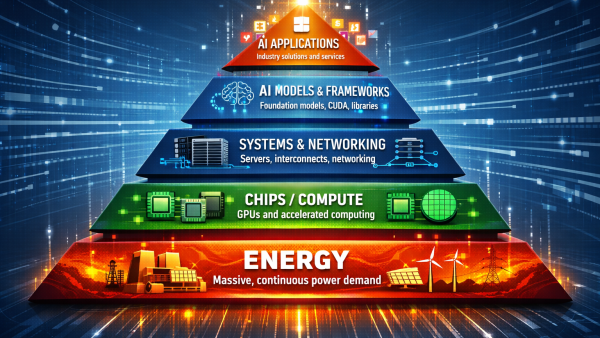
This doubt is legitimate. Between industrial plans talking about data centers consuming tens of gigawatts – numbers comparable to dozens of traditional power plants – and computational demand growing faster than our ability to think about it, it's easy to see AI as a giant energy black hole.
Then, however, news arrives that shifts perspective.
Like MIT's announcement about new ultra-thin solar cells: flexible materials, extremely lightweight, able to generate much more power per unit of weight compared to traditional panels, applicable to surfaces previously unthinkable – car bodies, sails, hulls, facades, mobile logistics.
Technology alone isn't enough, but the signal is clear
This technology alone won't solve the problem. It won't be enough to power 60 GW data centers, nor to replace the energy needs of AI infrastructure overnight.
But it sends a clear signal: faced with enormous pressure – energetic, economic, technological – the system responds with research, new materials, smarter energy mixes.
The truth is that every constraint we encounter in the AI race is becoming a multiplier of innovation.
The frantic evolution of computing architectures, nuclear agreements by major players like Meta and Microsoft, new solar panels, emerging storage technologies: they're all partial but converging responses to the same underlying tension.
The return of nuclear (and "shelved" ideas)
It's no coincidence that ideas which stayed on the margins for years are returning to the center of discussion:
- Thorium reactors
- Small modular reactors (SMR)
- 24/7 carbon-free scenarios
- Next-generation storage systems
And, probably, solutions we don't yet see, that will emerge from the meeting between new digital needs and increasingly tight physical constraints.
The question shifts: what infrastructure do we want?
The question, then, is no longer just:
"Does AI consume too much?"
It's:
"What energy infrastructure do we want to build for a world where AI will be everywhere?"
Because the point isn't to stop the race, but to direct it.
If we accept that AI will become a structural part of:
- Industry
- Public services
- Manufacturing
- Logistics
- Healthcare
...we can't treat the energy question as a technical detail anymore. It becomes a strategic issue: industrial, geopolitical, social.
Every challenge is also an upgrade opportunity
In this scenario, every challenge is also an upgrade opportunity:
- The complexity of data centers forces us to rethink the energy mix.
- Tensions on electrical grids push us to design better storage.
- The need to reduce emissions makes us reconsider technologies – like advanced nuclear – that in the past were shelved too quickly or discussed ideologically.
What will be the "enabling source"?
We don't yet know what the final "enabling source" of the next AI wave will be:
- Thorium?
- Fusion?
- Renewables with pervasive storage?
- A mix of all this?
- An innovation we can't even imagine today?
But the signal is already clear: challenges aren't slowing the system down, they're forcing it to level up.
It's always been this way
In the end, it's always been like this.
Every major technological leap has generated new pressures and, with them, the solutions to manage them.
The important thing is not to read only the problem part, but also the response part:
- Research that accelerates
- Materials that improve
- Energy mixes that get smarter
Conclusion: challenges force us to upgrade
Challenges don't stop us.
If we take them seriously, they force us to upgrade.
And this, in the long run, is often the most concrete form of progress.