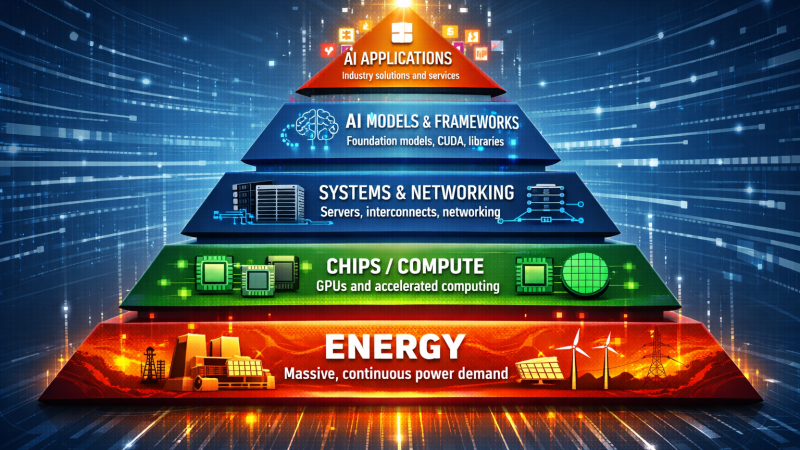
The AI Pyramid Nobody Looks At: Energy and Chips Come First
TL;DR: AI is a five-layer pyramid. The debate focuses at the top (models and applications). The real constraint is at the base: energy and chips. On b…
Energy, chips, geopolitics and big tech moves: what happens underneath AI and decides how much it will cost to use in the coming years.
Underneath every discussion about AI there is a more concrete one: energy, chips and who controls them. What it costs to use these models is not decided by your software vendor, it is decided by the availability of compute and the price of electricity. That layer is worth watching even if you have no intention of buying a data centre.
This is where the outlook pieces live: the race for energy, the paradox where efficiency raises consumption instead of lowering it, the geopolitics of chips, and what the large platforms do when the rules of the market change. They are here to show where the cost of what you are adopting is heading.
4 articles in this topic, updated 20 Mar 2026

TL;DR: AI is a five-layer pyramid. The debate focuses at the top (models and applications). The real constraint is at the base: energy and chips. On b…
The LEGO story teaches that innovation without direction leads to crisis. In the age of AI, innovating deeply on your core is worth more than chasing …
The more efficient AI becomes, the more it gets used. And the more energy it consumes. Jevons paradox from 1865 returns forcefully to the center of te…
Between data centers consuming tens of gigawatts and MIT's new ultra-thin solar cells, AI is forcing the system into an energy upgrade like never befo…
Because training and running models needs continuous computation, and computation becomes heat that has to be removed. The interesting part is that efficiency per operation improves while total consumption still grows, because far more operations get run.
Yes: the ability to manufacture the components AI needs is concentrated in very few places, which makes supply a political lever before it is an industrial one.
It has to do with price and continuity: what is cheap today because of a vendor's commercial choice can change. It is not wise to tie a critical process to a single supplier with no way out.
The two topics closest to this one
Take the free assessment: 5 minutes, 5 areas analyzed, personalized PDF report with concrete recommendations.
Find out how AI-ready you areFree, no signup required