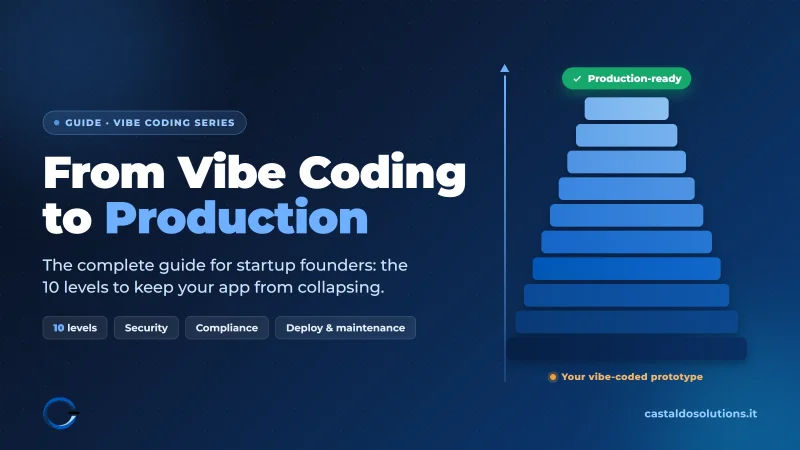
From Vibe Coding to Production: the Complete 10-Level Guide
Vibe coding gets you to a prototype in hours. Getting to production without disasters takes 10 levels of work. Here is the practical guide, level by l…
From an AI-written prototype to software that holds up in production: stack, security, testing, compliance and maintenance. The full series.
Writing software with AI moved the bottleneck: building a prototype that works became fast, taking it to production did not. Between the two sit authentication, secret management, tests beyond the happy path, backups, updates and the question of who owns the code you generated.
This is a series that follows that path end to end, level by level: stack, database, security, compliance, going live and maintenance. It is written for someone with a prototype running on a laptop who has to decide whether a business can be built on it.
7 articles in this topic, updated 08 Jun 2026
Vibe coding gets you to a prototype in hours. Getting to production without disasters takes 10 levels of work. Here is the practical guide, level by l…
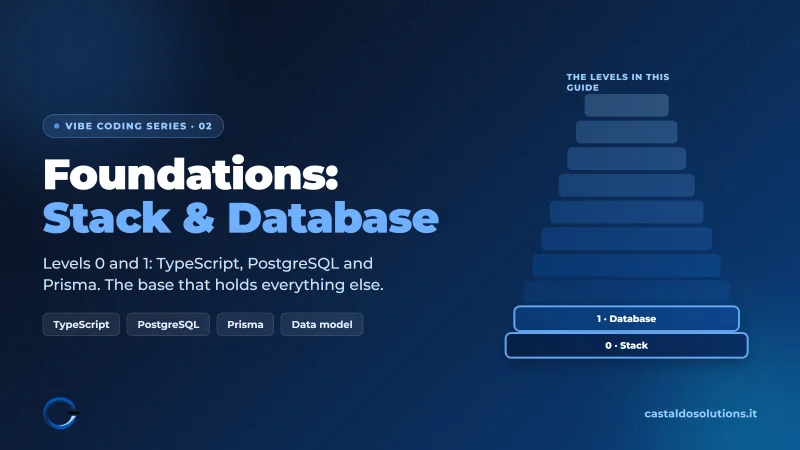
Foundations decide everything else. Here is why a vibe-coded app should start from TypeScript, PostgreSQL and Prisma, and how not to get the data mode…
Security is where vibe coding hurts most. Authentication, .env files, dependencies and dead code: the four controls to clear before going to productio…
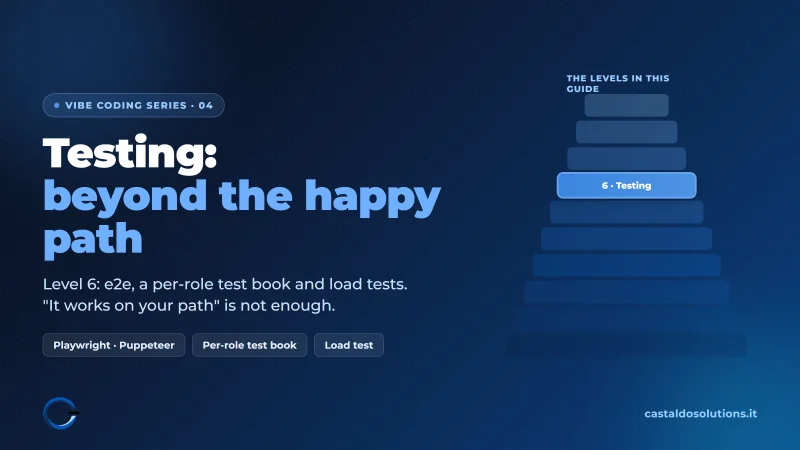
Your app works on your path, so it looks ready. But have you tested the other scenarios, the roles and the load? Here is Level 6: the testing that sav…
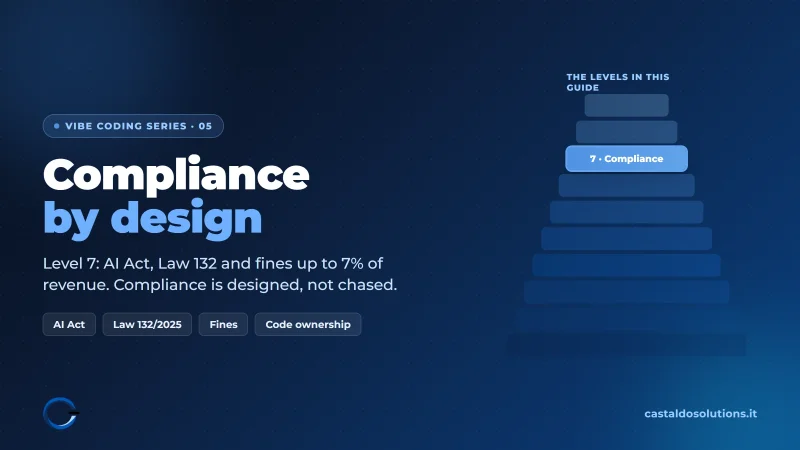
Compliance is not a sticker you slap on at the end. The AI Act, Italy's Law 132/2025 and fines up to 7% of revenue: here is why compliance is designed…
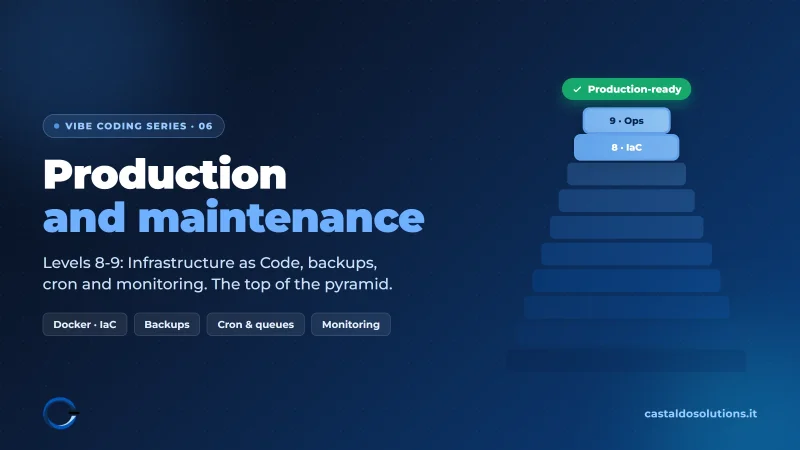
The top of the pyramid: how to actually ship a vibe-coded app to production with Infrastructure as Code, and keep it alive with backups, cron jobs and…
A complete prototype generated by AI in one hour: 12,000 lines of coherent code. If the analysis is clear, initial coding can be automated. Value shif…
Yes, but not as it is. What is almost always missing is error handling, tests on the unhappy paths, secret management and a way to keep dependencies updated. They are boring jobs, and they are the ones that make the difference.
It depends on the tool and its terms, and it is a question to ask before building a product on top. The same rule applies to compliance: you decide at the start, because redoing it later costs far more.
A lot, if nobody reads what the agent wrote. The countermeasure is not writing less code with AI: it is automated checks and a human review of what enters the repository.
Skills, MCP servers and the projects we use every day live in the Open Lab, with the code in plain sight.
Go to the Open LabOpen code, no sign-up